
Waste
Can Tell
a Story.
A sustainable mixed-media practice transforming reclaimed, recycled, repurposed and found materials into contemporary artworks about nature, identity, resilience, heritage and renewal.
SDG 12 · Responsible Consumption and Production
Artist: Jane Emmanuel · The Craft Thriller™
Reimagining what we
have learned to discard.
The Craft Thriller is a sustainable art practice built around a simple proposition: the end of an object’s first use does not have to be the end of its material life.
Jane Emmanuel works with materials including plastic bottles, sachet plastics, aluminium cans, bottle caps, cardboard, can tabs, eggshell fragments, shells, found objects and other reclaimed components. Through cutting, shaping, assembling, painting and hand-finishing, these materials are redirected into new artistic forms.
The environmental idea is embedded in the making itself. Sustainability is not applied as a theme after an artwork is made; material reuse is part of the artwork’s physical language.
“The idea may return,
but the materials will tell a different story.”
Recover materials that have reached the end of their conventional use.
Change their function through artistic interpretation, craft and composition.
Use transformed material to open conversations about consumption, value and environmental responsibility.
Beyond “recycled art.”
The Craft Thriller does not use recycled materials simply because they look unusual. Their previous lives are part of the meaning.
A bottle cap remains a reminder of consumption even after it becomes an ornament. A plastic sachet can become hair. Aluminium can become structure or texture. Cardboard can become a foundation. These transformations make the history of the material visible rather than hiding it.
The practice therefore connects material recovery, aesthetics and storytelling. It asks viewers to reconsider the categories of “waste,” “value” and “beauty.”
Nine works.
One evolving material language.

A Runway Diva
Explores fashion, beauty and visual identity through the transformation of discarded materials into a figure associated with elegance and presentation.
Rather than treating waste as an endpoint, the work redirects existing materials into artistic production and asks how discarded matter can acquire new cultural and aesthetic value.
— Jane Emmanuel
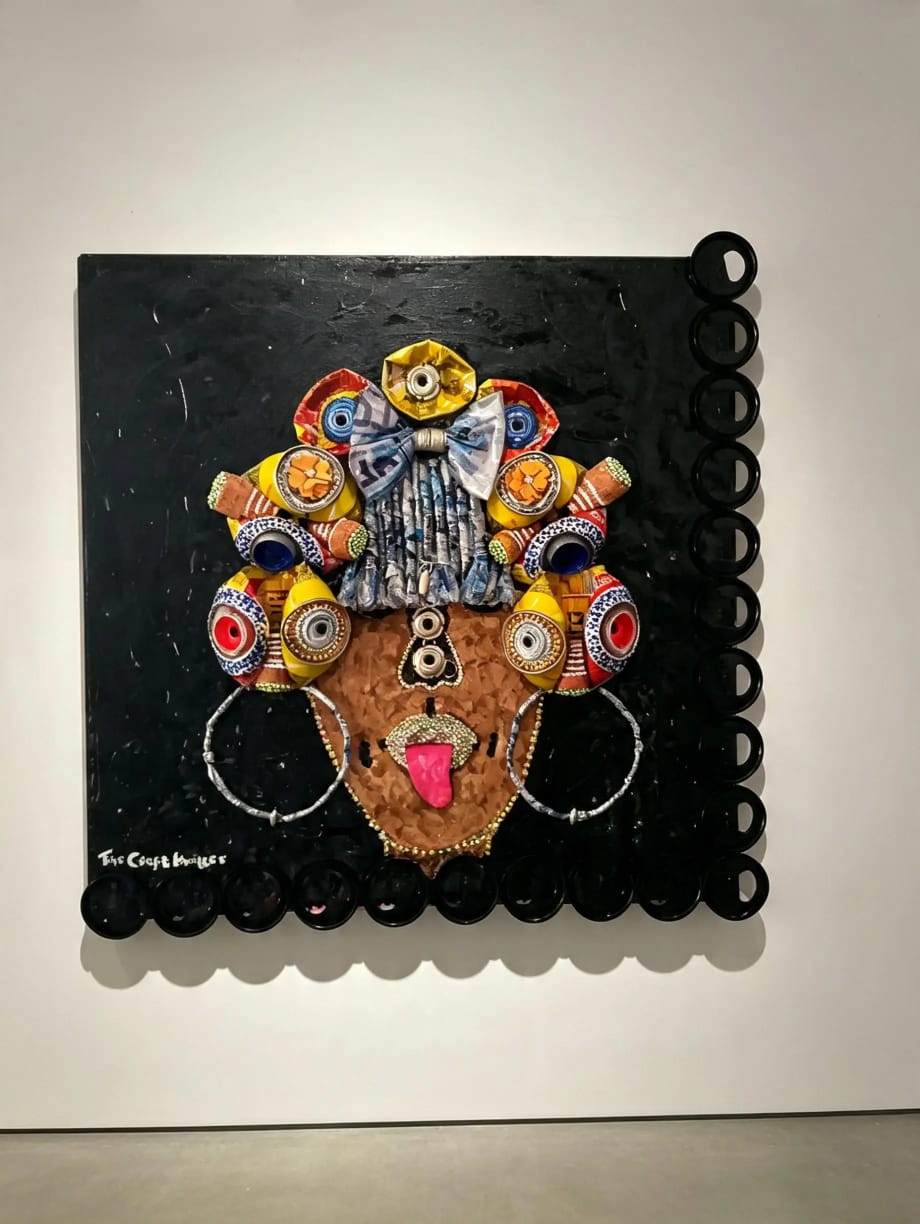
Scarred and Sassy
Explores imperfection, resilience and reclamation. Marks and material irregularities are embraced rather than concealed, allowing the history of reclaimed components to contribute to the work’s character.
The piece connects physical material reclamation with a wider reflection on identity and value.
— Jane Emmanuel
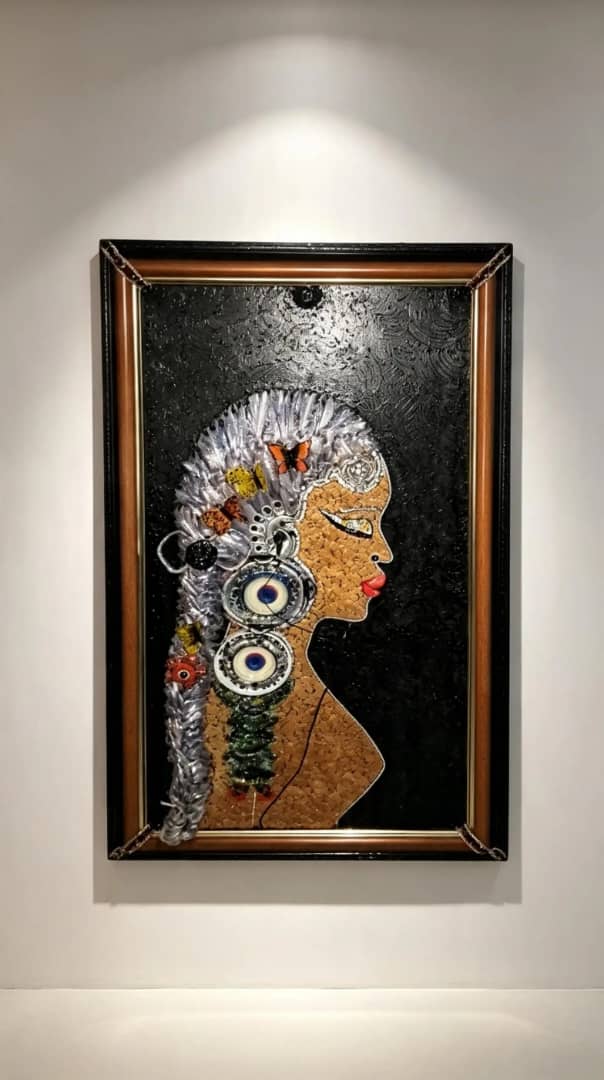
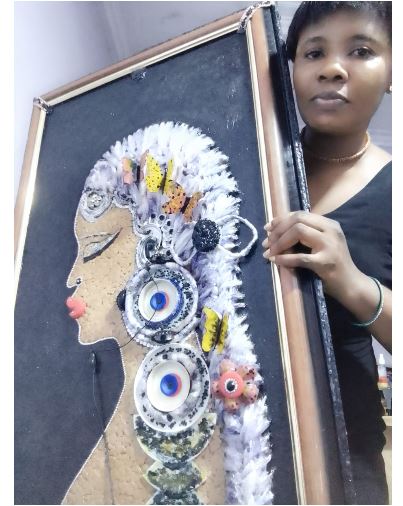
Earth Goddess
Represents nature as a presence calling humanity toward recycling, restoration and responsible use of resources. Reclaimed water sachet materials form the flowing hair, transforming discarded plastic into a symbol of elegance and abundance.
Eggs symbolize fertility, creation, renewal and the capacity of nature to bring forth new life.
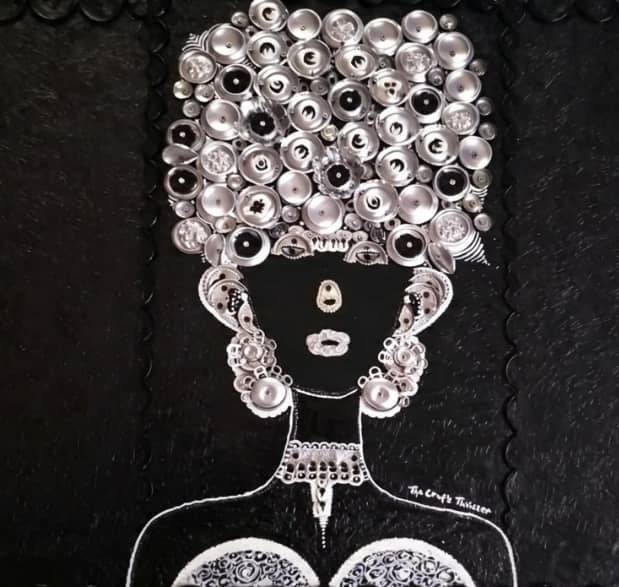
The Forgotten Princess
A work about overlooked value. Reclaimed materials transform a figure once discarded into something powerful and luminous.
Black speaks to hardship and obscurity; silver to resilience and rediscovered value; white to renewal, hope and transformation.

She Again Shall Bloom
Connects material renewal with human renewal. Flowers symbolize life, growth and resilience while reclaimed components become part of a visual language of transformation.
The work suggests that value does not disappear simply because it has been overlooked.

Unfinished Fiona
Presents a girl child as a work still becoming. Reclaimed materials connect her imagined future with the choices made today about recycling, reuse and sustainability.
Fiona represents a generation capable of seeing discarded materials differently and imagining more conscious ways of living.

The Harmonious Divas
Brings reclaimed metal, bottle materials and decorative fragments together as a visual orchestra. Individual discarded fragments become stronger through collective arrangement.
The work connects material reuse with heritage, rhythm, feminine energy and collective expression.

Creative Era
An earlier work in The Girl Child series exploring creativity, sustainability and possibilities for a new generation through reclaimed materials.
Reclaimed plastic bottles, bottle caps and other recycled materials are redirected into structural and decorative components, extending their material life through artistic use.

Locked Rage
A mixed-media work built on corrugated cardboard and assembled from materials originating in different forms of everyday consumption.
The work demonstrates material convergence: cardboard, sachet plastic, aluminium, eggshell fragments, can tabs and found objects acquire a shared artistic function within one composition.
2022 → 2025 → 2026
Material experimentation
Creative Era and Locked Rage demonstrate an early commitment to combining reclaimed plastics, cardboard, aluminium, eggshell fragments, can tabs and found objects with handcrafted visual forms.
Environmental storytelling
Earth Goddess makes the environmental dimension explicit, using reclaimed materials to speak directly about nature, recycling, renewal and responsibility.
An evolving material language
The newer works expand the practice into fashion, identity, resilience, heritage, future generations and renewal while maintaining material reuse as a central component of the making process.
From artwork to awareness
The practice aims to make sustainable thinking visible and memorable by allowing discarded materials to remain recognizable within new artistic stories.
I don’t just make art from waste.
I reimagine its value.
My practice begins with a question: What if we looked at waste differently?
I create mixed-media artworks from reclaimed, recycled and repurposed materials because I believe that the end of an object’s first use does not necessarily have to be the end of its usefulness.
Through art, I transform discarded materials into new forms that carry stories about nature, identity, resilience, femininity, heritage and the future.
My work is both creative and environmental. I want viewers to look twice at the things they normally throw away.
A bottle cap can become part of a crown. Plastic can become hair. Cardboard can become a body. An aluminium can can become a decorative element.
The material changes. But more importantly, our perception of the material changes.
That is where I believe sustainable art can create meaningful conversations about responsible consumption: not simply by telling people to produce less waste, but by helping us imagine more possibilities for what already exists.
Every version
carries its own identity.
Each artwork is an original mixed-media creation by Jane Emmanuel, handcrafted through the creative transformation of reclaimed, recycled and repurposed materials.
Some works may be recreated, reinterpreted or reproduced as new editions or variations. However, the nature of the medium means that no two versions can be exactly the same.
The availability, condition, colour, texture, shape, size and quantity of reclaimed materials naturally vary. Even when the same concept is revisited, the materials available at the time, together with the artist’s hand and creative interpretation, produce differences.
Every version carries its own identity.
A recreated work is a new artistic expression born from the same creative vision.This is an essential part of The Craft Thriller philosophy:
“The idea may return, but the materials will tell a different story.”
A practice aligned with responsible consumption.
The Craft Thriller is presented to ArtLimitless because sustainability is embedded in the material construction of these works and in the questions they ask audiences to consider.
The practice contributes to a cultural conversation about resource efficiency, waste reduction, reuse and the creative potential of discarded objects. It demonstrates how sustainability can become an aesthetic and storytelling strategy rather than a restriction on artistic expression.
My goal is not only to make objects from waste. It is to make people reconsider what they call waste.
That shift in perception is the beginning of a more circular creative imagination.
Jane Emmanuel
The Craft Thriller™
Visual artist · Sustainable mixed-media practitioner · Creative reuse advocate
Jane Emmanuel is the artist behind The Craft Thriller, a creative practice focused on transforming reclaimed, recycled and repurposed materials into mixed-media artworks.
Her body of work combines environmental ideas with figurative storytelling, exploring nature, womanhood, identity, resilience, heritage, renewal and the future through materials that have already participated in everyday systems of consumption.